


Flexible Glove Box: Thinking Outside the Box
Dynamic work environments and evolving regulatory requirements pose a challenge to standard, rigid glove boxes. Often, a fixed design becomes a constraint rather than a solution. At Binko Filtration Ltd., our starting point is that designing a “box” actually requires thinking outside the box.
Our approach focuses on developing flexible glove boxes that are customized to the user’s technical specifications. The process involves full engineering collaboration with the customer during the design phase, enabling us to create a precise solution for complex work environments where standard solutions simply do not suffice.
What is a glove compartment?
A glove box is a sealed workspace that allows for controlled processes to be performed in an isolated environment. The glove box, sometimes also referred to as an “isolator,” serves as a physical barrier between the user and the material being handled, for two main reasons:
Operator protection: Preventing exposure to hazardous, toxic, or explosive materials.
Process protection: Preventing contamination of the material by particles, moisture, or oxygen present in the external work environment.
Cell Structure and Principle of Operation
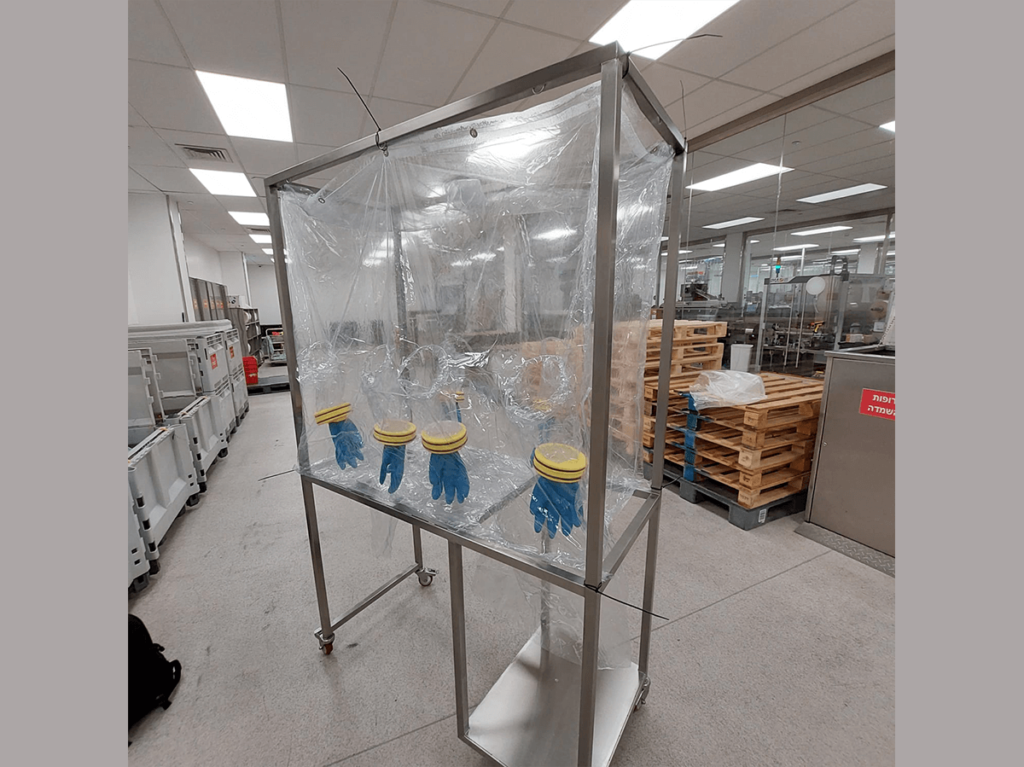
The isolation within the chamber is achieved through gloves attached to the flexible structure via special sleeves. These allow the operator to perform a variety of tasks inside the sealed space without compromising the required level of sterility or safety.
In addition to the gloves, additional "interfaces" can be integrated into the chamber and customized to meet the specific needs of the process:
Suction and discharge systems: for handling suspensions or for inflating and controlling pressure in the chamber.
Feed and discharge ports: Special openings for introducing raw materials or removing samples.
Service openings: Openings designed to accommodate tools and technical equipment.
The ability to produce openings and sleeves in various shapes and sizes is what transforms the glove box from an “off-the-shelf product” into a precision engineering solution that supports the workflow.
The engineering components of a flexible glove box
A glove box is not a one-size-fits-all product; it is a modular system built according to the specific requirements of the process. Here are the key components that make up the system:
1. Cell body and structure
The cabin is designed in various sizes and shapes to accommodate space constraints and work requirements.
Construction materials: For flexible cells, we typically use antistatic PVC or TPU sheets, which combine chemical resistance with high transparency.
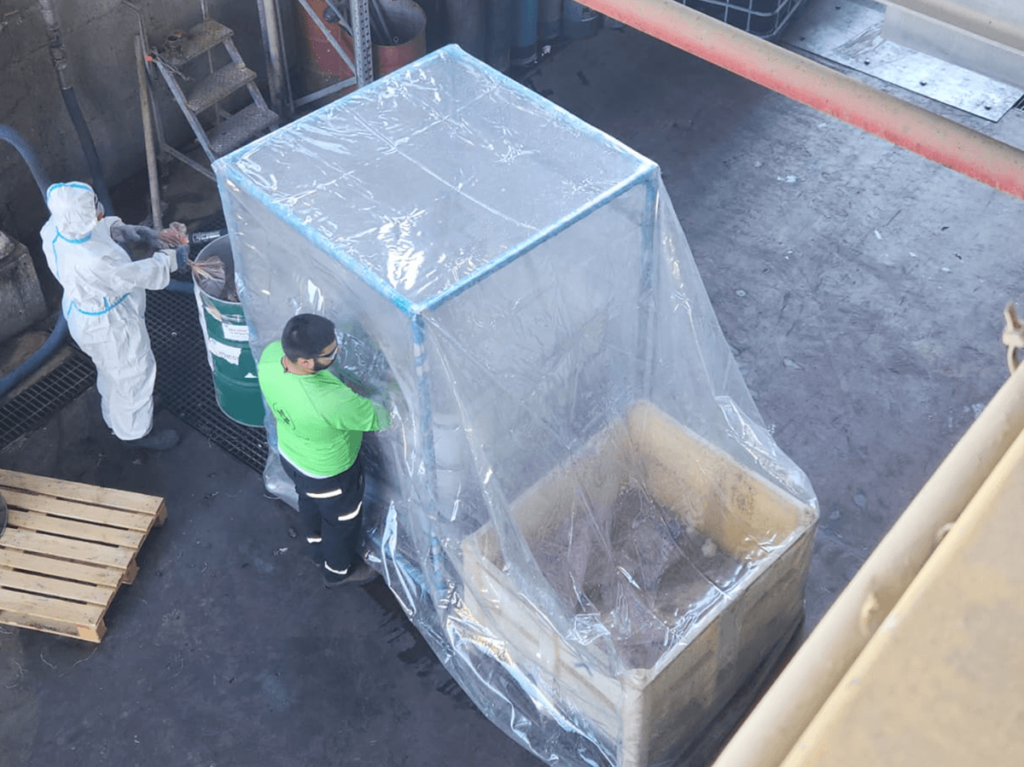
Structural support: The enclosure is suspended from or mounted on a dedicated structure—ranging from basic support rods to complex stainless steel frames, depending on the weight of the equipment inside the enclosure.
2. The Glove and Sealing System
The gloves are the operator’s primary point of contact. They are selected based on the required level of resistance (to chemicals, gases, or abrasion) and are attached to the chamber body using sleeves made of the same material. The connection is made using a unique welding or sealing technology that ensures mechanical strength and a complete seal at the weak points.
3. Material Transfer System (Air-Lock)
The AirLock serves as a critical buffer zone for introducing and removing tools and materials without compromising the level of isolation. The mechanism is based on two doors/openings that operate in sync: when the outer opening is open, the inner one is closed—and vice versa. This configuration prevents direct exposure of the chamber’s interior to the external environment.
4. Service sleeves and related interfaces
Universal sleeves can be integrated into the cell body and customized to meet specific functional needs:
Suction and discharge hoses: for air and pressure control.
Feed and sampling ports: which enable the safe transfer of material batches.
Air inlets and filters: Openings equipped with filters of various grades, which allow for controlled air exchange while maintaining sterility.
5. Docking Solutions
The flexible compartment is attached to the structure using anchor points designed for long-term durability. These may include metal rings, slotted rails, clamping sleeves, or elastic straps, depending on the level of flexibility required for the compartment.
The Added Value: Safety, Durability, and Quality
The use of glove boxes offers strategic advantages in development and manufacturing processes, which are reflected in three main areas:
Complete sealing and isolation: The system provides a high level of physical isolation between the interior space and the surrounding laboratory or factory environment. This isolation is the foundation for any process that requires clean conditions or a controlled environment.
Safety and Risk Mitigation: The ability to work with potent, toxic, or explosive materials inside a completely sealed chamber eliminates the risk of operator exposure. This solution enables compliance with strict safety standards while protecting worker health.
Product Quality Assurance (QA): Manufacturing and sampling within a cleanroom prevent contamination and ensure the purity of the material. The result is a final product with a higher level of reliability that meets the standards required by the biopharmaceutical and chemical industries.

The Advantage of Yanko Filtration: Where Engineering Meets Flexibility
What makes Yanko Filtration Ltd.’ s glove boxes the perfect solution for you? The combination of creative thinking and decades of experience in the process industries.
1. Advanced Construction Materials (Soft-Wall Technology)
Our enclosures are made from flexible sheets that offer high chemical and mechanical resistance. Unlike rigid enclosures, the flexible design allows for a wide range of motion and maximum operator comfort, without compromising on absolute airtightness.
2. Custom Design
We don’t believe in off-the-shelf solutions. Every booth is designed and customized with the client’s full involvement in the specification and development stages. Our goal is to adapt the booth to your work environment—not the other way around. This includes precision in glove placement, sleeve lengths, space dimensions, and specialized construction.
3. Operational efficiency and significant cost savings
The shift to flexible cells generates financial and logistical savings on several levels:
Single-Use Model: The cell can be used as a single-use solution, eliminating the need for time-consuming setup and the need for washing, disinfection, and validation between batches.
Storage and Maintenance: Thanks to their flexibility, the cells fold down to a minimal size, which dramatically reduces storage, transportation, and waste disposal costs.
Versatility: Although designed for single-use, the durability of the materials allows for reuse if necessary, subject to the customer’s safety procedures.
4. Generations of accumulated experience
Our greatest strength is our expertise. Yanko Filtration has been serving the chemical and pharmaceutical industries for decades. The experience we’ve gained working in the most demanding environments is embedded in every seam, weld, and sleeve we manufacture.
5. Uncompromising quality
All of our products are manufactured under strict quality control and comply with the ISO 9001:2015 standard. The combination of international standards and our personalized support ensures a reliable product that meets the most stringent regulatory requirements.
Smart Insulation Solutions for a Changing World
In the industrial world, flexibility is no longer just an advantage—it is a necessity.Yanko Filtration Ltd.’sflexible glove boxes provide you with the perfect balance between maximum operator protection and exceptional operational efficiency, while being fully engineered to meet your unique needs.
When you choose our solution, you’re not just buying a “box”—you’re tapping into decades of industry experience and accumulated knowledge to ensure the safety and quality of your product.





